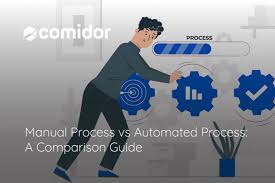
Recent studies show that AI adoption can lead to a productivity increase of 40% in businesses. Embracing artificial intelligence (AI) enablement or sticking to manual processes isn’t merely a matter of trend adaptation but reflects on operational efficiency and business scalability. As organizations clock different mileage on the digital transformation highway, decision-makers grapple with this vital choice.
Factors like cost, process complexity, and data sensitivity play a significant role in determining which method suits particular business operations. In this article, we’ll delve deeper into the aspects that influence the decision between AI enablement and manual processes, providing insights into how each can serve your business objectives.
AI Enablement in Modern Business Operations
AI enablement has become a driving force in the restructuring of business operations, offering unprecedented levels of speed and insight. By leveraging algorithms and machine learning, companies can process vast amounts of data quickly, identifying trends and making predictive analyses that human operatives would struggle to match.
For example, in the financial sector, AI enablement has been instrumental in fraud detection, with systems capable of monitoring and evaluating transactions in real-time, significantly reducing instances of financial crime. With improved decision-making capabilities, businesses are more agile and positioned to capitalize on market opportunities, including how to use ai enablement.
Companies considering AI should evaluate their data infrastructure, ensure the availability of skilled personnel for AI management, and prepare for a cultural shift that embraces continuous learning and adaptation to make the most of AI enablement.
Manual Processes: Enduring Relevance in a Digital World
Despite the surge in AI adoption, manual processes maintain their stronghold in certain business areas. In scenarios where customization and human judgment are paramount, manual input cannot be easily replaced by machines. These processes thrive on human interaction, expertise, and decision-making, particularly in creative and strategic roles.
Consider the example of customer service; while chatbots can handle routine inquiries, complex customer issues often require the empathy and nuanced understanding of a human agent. Manual processes also present fewer barriers to implementation, avoiding the initial investment and technical challenges of setting up AI systems.
Businesses should conduct a thorough assessment of their workflows, identifying areas that demand the human touch and ensuring that employees are adequately trained to maintain the high standard of work that automatic systems cannot achieve.
Evaluating Efficiency and Accuracy: AI vs. Human Input
When selecting between AI enablement and manual processes, efficiency and accuracy are pivotal factors. AI systems excel at repetitive and high-volume tasks, performing them with consistent precision and minimal error, which can be a game-changer in industries like manufacturing and logistics.
On the contrary, tasks that require complex decision-making and adaptability can benefit from human insight. AI may struggle to interpret nuances and context the way a human can, leading to potential inaccuracies in fields like legal services and content creation. A hybrid approach often yields the best results, allowing AI to handle data-heavy workloads while humans tackle more intricate issues.
Organizations need to measure the performance metrics relevant to their industry, consider the nature of the tasks to be automated, and weigh the implications of losing or gaining accuracy and efficiency in their operational domains.
Cost-Benefit Analysis of AI Integration Versus Manual Approaches
Investing in AI can appear costly at first glance, but a detailed cost-benefit analysis often reveals long-term savings and increased profitability. The reduction in manual labor and heightened productivity can result in significant financial advantages, particularly for enterprises with scalable models.
However, manual processes might still be preferable in smaller businesses where the scale and volume of operations do not justify the investment in AI technologies. Moreover, the hidden costs associated with AI, such as needing specialized staff and continuous training, must also be accounted for. Cutting through the AI hype and understanding the total cost of ownership is critical for making an informed decision.
Decision-makers are advised to consult with technology and financial experts to conduct a comprehensive analysis, taking into account their specific operational context and long-term strategic goals to determine the viability of AI enablement versus traditional manual processes.
Ultimately, the choice between AI enablement and manual processes hinges on a balanced assessment of each method’s advantages and limitations relative to your business goals. Both strategies offer unique benefits and, in some cases, could be combined for optimal results. The key lies in recognizing which processes are prime for automation and which should remain human-led to best serve your organization’s performance, growth, and customer satisfaction.