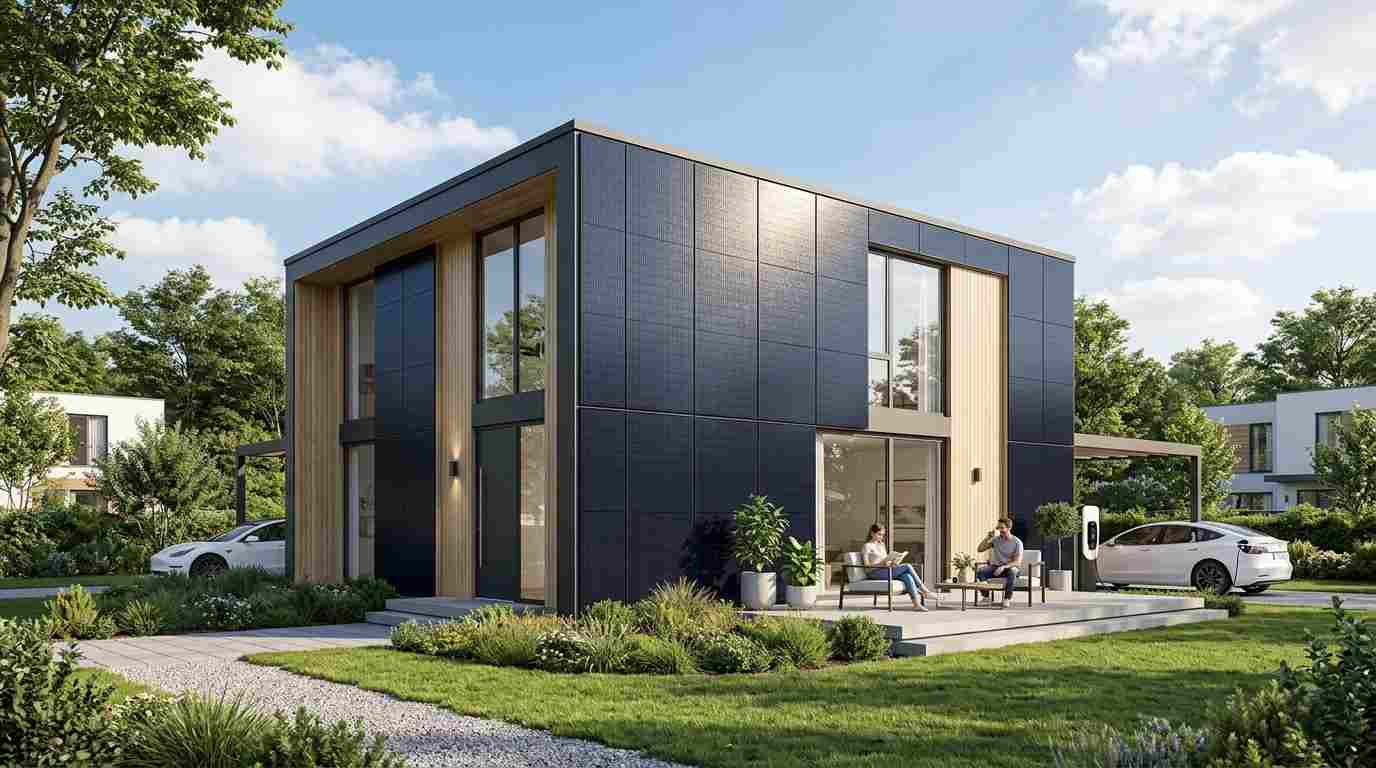
Solar panel siding lets you turn exterior walls into power generators while preserving your building’s look. If you want to reduce energy bills and integrate clean power directly into your building envelope, solar siding can deliver meaningful generation and a sleeker alternative to rack-mounted panels.
You’ll learn how building-integrated photovoltaics (BIPV) work, what types of siding and cladding carry solar cells, and how installation and drainage affect long-term performance. Expect practical trade-offs—aesthetic integration and space-efficient generation versus potential higher upfront cost and specific installation requirements.
This article will guide your assessment of benefits, costs, and implementation considerations so you can decide whether solar siding fits your goals and site conditions.
How Building-Integrated Photovoltaics Work
BIPV systems turn parts of your building envelope—roofing, cladding, windows—into active electricity generators while also serving structural or aesthetic roles. They rely on specific PV technologies, mounting approaches for vertical surfaces, and performance factors tied to orientation, shading, and thermal behavior.
Key Technologies and Designs
BIPV uses several PV technologies tailored to surfaces and visibility. Crystalline silicon modules offer high efficiency for opaque cladding panels. Thin-film (CIGS, CdTe) and emerging perovskite-on-glass options deliver lighter weight and better flexibility for curved façades or semi-transparent elements.
You’ll see semi-transparent modules for spandrel areas and windows, which balance daylight with power production. Bifacial cells can capture reflected light from exterior finishes and nearby surfaces, increasing yield on façades with high albedo.
Design variants include flat panels that replace conventional siding, large-format curtainwall panels integrated with rainscreen systems, and modular shingles or tiles for vertical and sloped surfaces. Electrical routing, junction boxes, and inverters typically conceal behind the cladding or in mechanical spaces to preserve appearance and meet fire/electrical codes.
Installation Methods Unique to Exterior Walls
Wall-mounted BIPV attaches differently than rooftop systems because of wind, water, and thermal movement concerns. You’ll choose between direct replacement (panels act as the outer cladding) and retrofit cladding (panels mounted over an existing weather barrier). Both require integrated flashing, continuous air and vapor barriers, and planned drainage paths to prevent water intrusion.
Mechanical attachment systems use rails, clips, or hybrid adhesive-mechanical anchors designed for vertical loads and uplift from wind. Sealing interfaces around windows and penetrations follows standard façade detailing but must also maintain electrical isolation and access for wiring.
Electrical integration often places DC combiner boxes and microinverters at floor levels or behind panels. Fire separation, access panels for maintenance, and clear labeling for emergency responders are typical code-driven requirements you must address during design and permitting.
Energy Generation Performance
Vertical orientation changes the production profile compared with rooftop arrays. You’ll typically get lower peak power per square meter on a vertical façade than on a sun-tilted roof, but façades can produce useful energy during morning or late-afternoon hours when the sun is low. Orientation (north/south/east/west), tilt angle of mounted panels, and local solar incidence dominate yield.
Shading from neighboring buildings, balconies, and window overhangs reduces output quickly; site-specific shading analysis and string/inverter selection mitigate losses. Thermal effects matter: facade-mounted PV can run hotter in stagnation scenarios, lowering efficiency—ventilated mounting or heat-dissipating backer materials improves performance.
System monitoring with per-panel or per-string metering helps you verify expected production and spot soiling or shading issues so you can maintain long-term energy delivery.
Benefits and Implementation Considerations
This section explains how solar panel siding affects appearance, long-term performance, and project economics. It highlights practical trade-offs you should weigh when choosing integrated photovoltaic cladding.
Aesthetic Integration with Architecture
You can match solar siding to your home’s style more seamlessly than rack-mounted panels. Options include thin-film BIPV panels that mimic traditional siding profiles, or prefabricated PV cladding panels with textured or colored faces to complement brick, wood, or metal exteriors.
Consider visible seams, panel size, and mounting pattern early in design. Larger modules reduce seam frequency but can disrupt window or trim alignments. Work with your architect to place panels where they receive maximum sun while preserving planned sightlines and curb appeal.
Ask manufacturers for physical samples and full-scale mockups. Samples reveal color shift at different light angles and help you confirm how panels weather over time. Specify trim treatments and junction locations to avoid an unfinished appearance.
Durability and Weather Resistance
Solar siding must resist impact, moisture, UV, and thermal cycling for decades. Choose products rated for local climate hazards—hail, salt spray, freeze–thaw—and request third-party test data for wind uplift, water infiltration, and UV exposure.
Pay attention to the system’s thermal behavior. A ventilated cladding cavity improves PV efficiency and reduces heat transfer into the wall assembly. Confirm compatibility of flashing details and the air/water-resistive barrier to prevent leaks at penetrations and at window and door interfaces.
Maintenance needs vary by material. Expect occasional rinsing for dirt, periodic sealant replacement at joints, and inspection of electrical connections every few years. Require warranties covering both power output (typically 10–25 years) and weathering (panel and attachment).
Cost Factors and Financial Incentives
Solar siding typically costs more per watt than rooftop panels because it integrates structure, finishes, and electrical systems. Expect higher up-front prices for BIPV systems and prefabricated PV cladding compared with conventional siding plus separate rooftop PV.
Calculate total installed cost including: wall preparation, structural reinforcement, flashing and waterproofing, electrical work, and labor for custom integration. Compare this to the combined cost of standard siding replacement plus a rooftop solar array to determine incremental premium.
Investigate local and federal incentives. You may qualify for investment tax credits, utility rebates, or local building incentives if the PV system meets program requirements. Document eligibility before purchase, because some incentives require specific product certifications or separate metering to count toward rebate thresholds.