When you flip a switch in your home, the resulting light is the final step in a massive, coordinated journey. Historically, this journey was managed entirely by large, government-owned or state-regulated utility monopolies. However, the modern energy landscape has shifted significantly toward a more decentralized and competitive model. At the heart of this transformation is the Independent Power Producer, or IPP.
Defining the Independent Power Producer
An Independent Power Producer is a private entity that owns and operates facilities to generate electricity for sale to the public power grid. Unlike traditional “utility generators,” IPPs do not typically own the transmission lines that deliver power to your house; instead, they act as wholesalers. They generate the energy and sell it to utilities or directly to large industrial consumers through long-term contracts known as Power Purchase Agreements (PPAs).
IPPs are often referred to as “Non-Utility Generators” (NUGs). Their emergence was driven by a global move toward deregulating energy markets, allowing private investment to foster innovation and lower costs for the end consumer.
How IPPs Generate Electricity
The core process of an IPP facility mirrors that of any large-scale power plant. The primary goal is to convert one form of energy into mechanical motion, which then drives a generator. Whether the facility uses fossil fuels like natural gas or renewable sources like wind and solar, the fundamental physics remains consistent: spinning a rotor within a magnetic field to move electrons and create a current.
Diverse Energy Portfolios
One of the greatest strengths of IPPs is their flexibility in energy sourcing. While a traditional utility might be tied to an aging coal fleet, IPPs are often at the forefront of the green energy transition.
- Renewables: Many IPPs specialize in wind farms or solar arrays, contributing to a more sustainable grid.
- Thermal Plants: Some utilize natural gas or biomass to provide “baseload” power, ensuring the grid remains stable even when the sun isn’t shining.
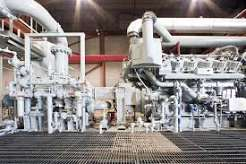
- Maintenance: Because these facilities operate 24/7, IPPs employ specialized technicians to manage complex machinery. This includes the sourcing and installation of high-quality turbine parts to prevent downtime and maintain peak efficiency.
The Journey from Plant to Plug
Once an IPP generates electricity, the power must be prepared for long-distance travel. Electricity leaves the generator at a relatively low voltage and is “stepped up” via transformers to a much higher voltage. This high-voltage transmission is essential because it minimizes energy loss as the power travels across miles of lines.
Eventually, this power reaches substations near residential or commercial areas. At this point, step-down transformers reduce the voltage to safe, usable levels. While the IPP provides the “product,” it is the local distribution utility that handles the “delivery” to your doorstep.
Why IPPs Matter in the Modern World
The rise of independent producers has brought several key benefits to the global energy infrastructure:
- Increased Investment: By allowing private companies to enter the market, governments can attract billions in private capital for infrastructure development without burdening taxpayers.
- Rapid Innovation: IPPs are often faster to adopt new technologies, such as advanced battery storage or high-efficiency solar panels, compared to traditional bureaucratic utilities.
- Grid Resilience: A grid powered by dozens of smaller, independent producers is often more resilient than one relying on a few massive, centralized plants. If one IPP facility goes offline for maintenance, others can pick up the slack.
- Sustainability: IPPs have been instrumental in the growth of “off-grid” and “near-grid” renewable projects, helping societies reduce their overall carbon footprint.
Challenges and the Path Ahead
While IPPs offer many advantages, they also face significant hurdles. Grid integration remains a complex task; the “brain” of the operation—the control room—must constantly balance the variable output of renewable IPPs with the steady demand of the population. Furthermore, navigating the legal regulations and environmental safeguards of different regions requires constant vigilance and adaptation.
As we move toward a more electrified future, the role of Independent Power Producers will only grow. By fostering a competitive environment where efficiency and sustainability are rewarded, IPPs ensure that our modern world remains powered, connected, and productive. Understanding these entities is the first step in appreciating the remarkable engineering and orchestration required to keep the lights on every single day.