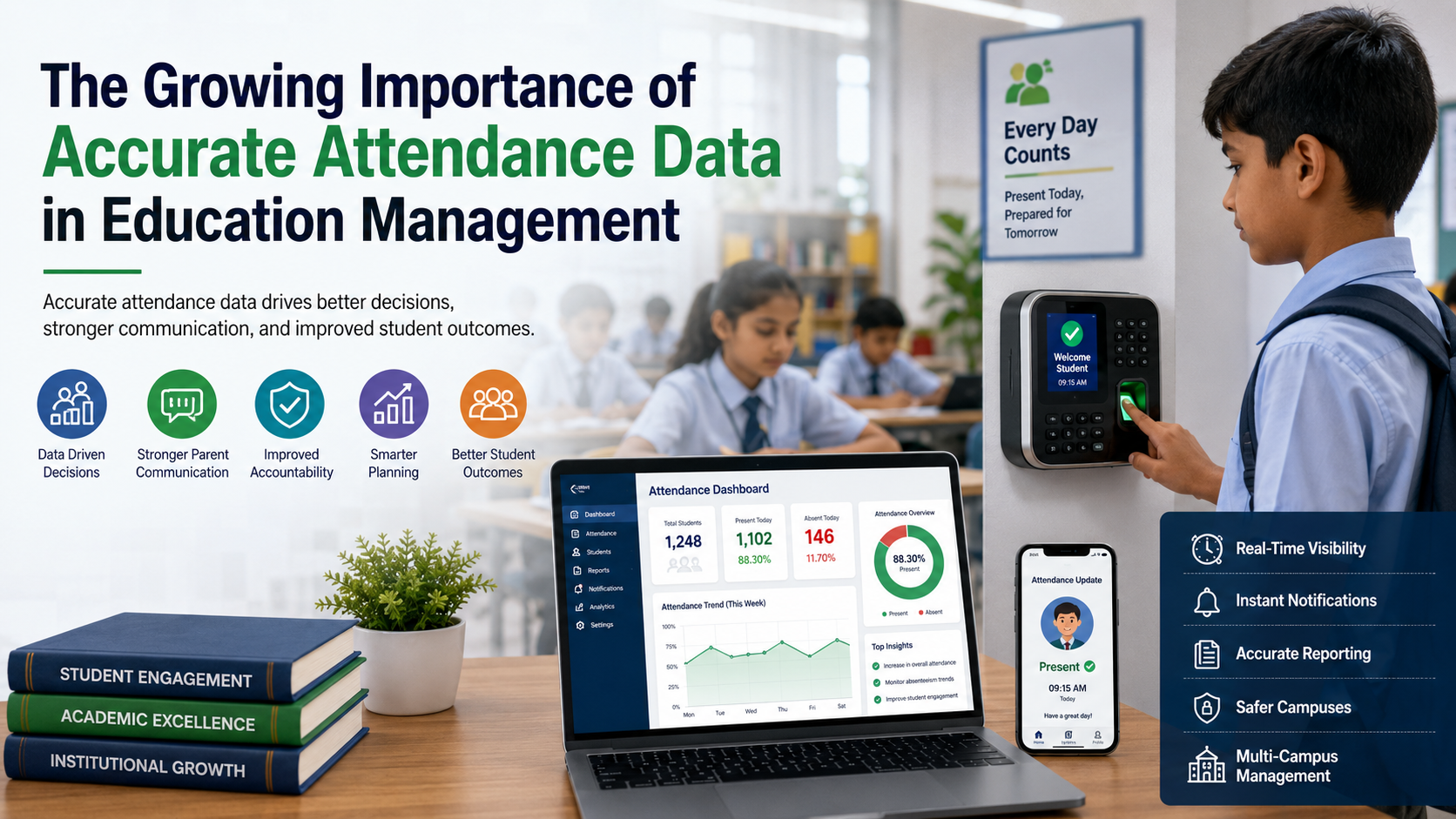
Attendance data has become one of the most important operational elements in modern education management. Schools no longer use attendance records only to mark student presence. Institutions now depend on attendance information for academic monitoring, parent communication, operational planning, and student accountability. To manage these responsibilities more effectively, many educational institutions are implementing school software that helps centralize attendance records and improve reporting accuracy across departments.
Small Attendance Errors Can Create Bigger Problems
Attendance management may appear simple, but even minor inaccuracies can affect multiple operational areas.
Incorrect attendance records can impact:
- Academic reports
- Parent communication
- Student performance monitoring
- Examination eligibility
- Institutional reporting
Manual systems increase the chances of missed entries and reporting inconsistencies.
In larger institutions, tracking attendance manually becomes even more difficult because multiple classes and departments generate records simultaneously.
Schools now require systems that provide faster updates and better operational visibility.
Schools Depend on Attendance Data for Daily Decisions
Educational institutions make many operational decisions using attendance information.
Administrators regularly monitor attendance patterns to identify concerns related to:
- Student engagement
- Classroom participation
- Academic discipline
- Staff coordination
- Operational efficiency
Without accurate attendance data, leadership teams may struggle to respond to issues quickly.
Real-time attendance reporting improves institutional awareness and supports faster decision-making.
Schools can identify absenteeism trends earlier and provide timely support where needed.
Parents Expect Reliable Attendance Updates
Modern parents want immediate visibility into student attendance activity.
Families now expect schools to provide timely notifications regarding:
- Student absences
- Late arrivals
- Early departures
- Attendance summaries
Traditional attendance methods often delay communication because records require manual processing.
Digital attendance systems improve parent communication through automated updates and centralized reporting.
This helps schools strengthen transparency and build stronger trust with families.
Parents also gain greater confidence when attendance information remains accurate and easily accessible.
Manual Attendance Systems Slow Down Operations
Many educational institutions previously relied on paper registers and spreadsheet-based attendance tracking.
These methods create several operational challenges.
Administrative teams often spend hours:
- Verifying attendance entries
- Preparing reports
- Updating records
- Coordinating with teachers
- Responding to parent inquiries
Manual systems increase workload pressure while reducing operational efficiency.
Digital platforms simplify attendance management through automation and centralized information handling.
This reduces repetitive work and improves overall coordination between departments.
Real Time Attendance Visibility Improves Accountability
Schools require real-time awareness of student presence throughout the academic day.
Delayed attendance reporting limits operational visibility and may affect accountability during emergencies or operational incidents.
Modern attendance systems provide instant updates across departments.
Administrators can quickly monitor:
- Daily attendance activity
- Section-level attendance patterns
- Frequent absenteeism
- Campus-wide participation trends
This improves institutional accountability while supporting stronger operational management.
Schools also gain better control over student monitoring and reporting processes.
Technology Has Changed Attendance Management
Educational institutions are increasingly adopting automated attendance technologies to improve efficiency and reduce human error.
One commonly adopted solution is the school biometric attendance system, which automates student identification and attendance verification.
Biometric attendance systems improve operational accuracy by reducing manual dependency.
Schools benefit from:
- Faster attendance recording
- Reduced duplicate entries
- Better reporting consistency
- Improved accountability
- Real-time attendance monitoring
These systems also support stronger transparency across educational operations.
Attendance Trends Help Schools Identify Student Concerns
Attendance data provides valuable insights into student behavior and engagement.
Frequent absences may indicate:
- Academic difficulties
- Health concerns
- Transportation problems
- Low classroom engagement
- Family-related challenges
When schools monitor attendance trends effectively, they can identify concerns earlier and provide timely intervention.
This improves student support and strengthens institutional responsiveness.
Accurate attendance data therefore plays an important role in student development.
Teachers Benefit From Faster Attendance Systems
Teachers already manage demanding classroom responsibilities throughout the academic year.
Manual attendance tracking increases administrative pressure and consumes valuable teaching time.
Digital attendance systems simplify classroom workflows by allowing teachers to record attendance quickly and accurately.
Teachers can also:
- Access attendance history instantly
- Generate reports faster
- Monitor classroom participation trends
- Coordinate with administrators more efficiently
This improves classroom organization and allows educators to focus more on learning activities.
Attendance Reporting Supports Academic Planning
Educational institutions regularly use attendance data during academic evaluations and operational planning.
Attendance reports help schools review:
- Student participation levels
- Section performance trends
- Academic engagement patterns
- Institutional efficiency
Manual reporting often delays this process because information must be collected from multiple sources.
Automated systems generate reports instantly through centralized dashboards and digital records.
This improves planning accuracy and supports better institutional decision-making.
Multi Campus Institutions Need Standardized Attendance Processes
Educational groups operating multiple campuses often face reporting inconsistencies when attendance systems differ between branches.
Separate workflows reduce centralized visibility and operational coordination.
Digital attendance platforms help institutions standardize attendance tracking across campuses.
Leadership teams can monitor attendance activity from all locations through a centralized dashboard.
This improves operational consistency and strengthens institutional oversight across branches.
Schools can also compare attendance trends between campuses more effectively.
Attendance Accuracy Supports Institutional Transparency
Transparency has become increasingly important in modern education management.
Parents, teachers, and leadership teams all expect accurate and accessible operational information.
Reliable attendance records improve institutional transparency by providing consistent and verifiable reporting.
Schools can maintain organized attendance histories while improving communication reliability.
Transparent operations also strengthen trust between educational institutions and families.
Better Attendance Data Improves Resource Planning
Attendance information also helps schools manage operational resources more effectively.
Institutions can use attendance trends to evaluate:
- Classroom utilization
- Staff allocation
- Transport requirements
- Academic scheduling
- Operational planning
Without accurate attendance data, resource management becomes less efficient.
Digital systems improve visibility into operational requirements while supporting better planning decisions.
This helps schools optimize institutional operations more effectively.
Attendance Monitoring Supports Safer Campuses
Educational institutions must maintain awareness regarding student presence throughout the day.
Accurate attendance systems improve safety by helping schools monitor who is present on campus during operational hours.
During emergencies or unexpected situations, real-time attendance visibility becomes extremely important.
Schools can respond more quickly when attendance information remains accurate and centralized.
This strengthens institutional accountability and operational preparedness.
Administrative Efficiency Improves Through Automation
Attendance management creates large amounts of repetitive administrative work.
Automation simplifies many tasks such as:
- Attendance verification
- Report generation
- Parent notifications
- Record synchronization
- Data analysis
This reduces workload pressure for school staff while improving operational speed and reporting accuracy.
Administrative teams can focus more on planning and student support instead of repetitive coordination activities.
Educational Institutions Need Scalable Attendance Systems
As schools expand operations and student populations, attendance management becomes more complex.
Manual systems often struggle to support long-term scalability.
Digital attendance platforms provide the flexibility required for future institutional growth.
Schools can manage increasing attendance records while maintaining stronger operational visibility and reporting reliability.
Scalable systems also support multi-campus operations and growing administrative requirements.
Attendance Data Is Becoming a Strategic Asset
Educational institutions no longer treat attendance records as simple administrative documents.
Attendance information now supports:
- Student monitoring
- Academic planning
- Operational reporting
- Parent engagement
- Institutional accountability
Schools that manage attendance data effectively gain stronger operational control and better planning capabilities.
Digital systems allow institutions to transform attendance records into actionable operational insights.
The Future of Attendance Management in Education
Attendance management continues evolving alongside modern educational technology.
Schools now require systems that support real-time visibility, operational coordination, and accurate reporting across departments.
Educational institutions adopting modern attendance platforms are improving efficiency, transparency, and student accountability throughout campus operations.
As education becomes increasingly connected and technology-driven, accurate attendance data will continue playing a major role in institutional planning and operational success.
Schools investing in modern attendance systems today are building stronger foundations for future scalability, transparency, and educational excellence.