Hard water is one of the most common issues that American homeowners have to deal with. The high levels of calcium and magnesium in your water supply can cause serious damage to your home. The mineral deposits that build up in your pipes and on your glassware can be frustrating.
The damage that hard water causes to your household appliances can be significant. In the long run, the damage that untreated hard water causes to your home can be costly.
The most effective way of protecting your home against the effects of hard water is by installing a Kinetico softener, for instance. There are two common methods that the industry uses to solve the problem of hard water. You can either choose the conventional salt-based system or the modern salt-free system. The knowledge of how each system works will enable you to make the right decision.
Understanding Salt-Based Water Softeners
The conventional system has been in use for decades. The system is highly effective in removing all the hard minerals in your water supply.
How Ion Exchange Works
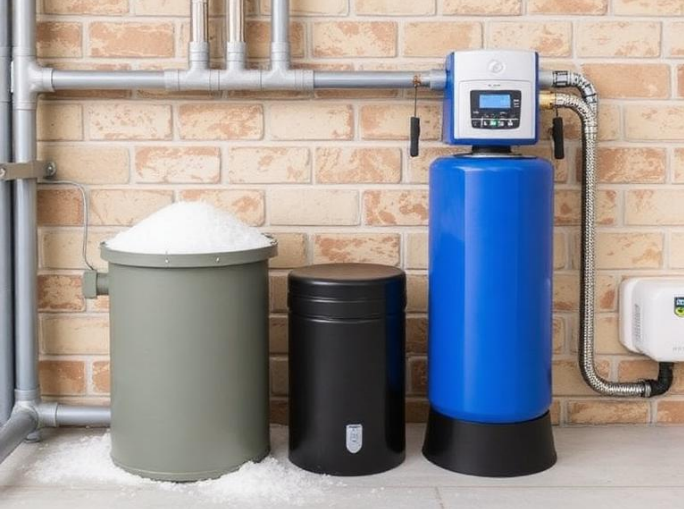
The conventional system uses the ion exchange process in the removal of hard water. The system comprises a tank that holds negatively charged resin. The resin attracts the positively charged calcium and magnesium ions in the water. The system then releases sodium ions into the water to replace the calcium and magnesium.
The Pros and Cons
The first advantage of using a salt-based system is that it guarantees complete elimination of scale. Your clothes will be much softer, and your appliances will be running at peak efficiency. However, there is also a drawback. You have to constantly purchase and carry heavy bags of salt that have to be replenished in your brine tank. Moreover, the regeneration process also sends salty wastewater into your drainage system, which is not good for the environment.
Exploring Salt-Free Water Conditioners
As mentioned earlier, salt-free systems do not actually soften water but rather condition it. Therefore, they cannot be classified as true water softeners.
The Science of Crystallization
Today’s salt-free systems utilize what is called Template Assisted Crystallization. This method is more complex than simply filtering or removing mineral deposits. Rather, it changes their chemical composition. Calcium and magnesium are transformed into small crystals. Since these minerals have been crystallized, they do not clog your pipes or stick to your plumbing. Rather, they flow freely with your water.
Benefits and Drawbacks
If you are an environmentally friendly person, then you will definitely appreciate the salt-free system. It uses no water at all during its operation. What’s more, it does not harm the environment with sodium brine. It also uses no electricity at all. Furthermore, there is almost no maintenance at all since you do not have to purchase any salt. However, there is also a drawback. Your water is still technically hard. You might still notice small water spots on your dishes. Also, you will not get that slippery feeling associated with soft water.
Comparing the Key Differences
If we discuss maintenance requirements, then salt-free systems have the clear advantage. You simply have to install your system, and that is it. Salt-based systems, on the other hand, need to be constantly monitored. From an environmental point of view, salt-free systems offer more benefits for America’s soil and water supply.
The cost analysis shows that there is a trade-off between the two. Salt-free conditioners are more expensive to purchase. However, the salt-based water softeners are more expensive in the end because one has to keep buying bags of salt and the additional water required in the flushing process.
Securing Cleaner Water for Your Property
The best water system for you solely relies on your household needs. For instance, if you are seeking 100% soft water with no traces of limescale, then a conventional salt system is your best bet. Alternatively, if you are seeking a hassle-free, eco-friendly solution that prevents extreme damage to your plumbing, then a salt-free conditioner would work best for your property!